19+ in Ontario, 18+ in Alberta, Manitoba and Quebec. The rating shown here is the operator rating reported by the site owner on 19 October 2026: five stars from 4,889 reviews. Availability depends on where you are and on eligibility. Deposit routes, cashout timing, verification steps, offer structure, wagering and limits are set by the operator and are not stated here — read them in the cashier and in the current terms after you sign in. We do not guarantee payout speed or availability in your province. Gambling costs money; treat any balance as spent. Checked: 19 October 2026.
Most interac online casino guides treat Interac as a logo you click. It is actually a Canadian interbank network, and when you deposit through it the decisive moment happens inside your own online banking rather than inside the cashier. This page follows the money across that boundary: which Interac product you are really using, which institutions take part, who issues a decline, and why the road back out is not the same road.
By the OntarioCashout desk · checked October 19, 2026 · 19+ Ontario
In short: An interac online casino never asks for your card number. It hands your session to your own bank, you approve the payment on the bank's screen, and the bank rather than the casino is usually what approves or refuses it.
What an interac online casino actually means
An interac online casino is not a casino that issues its own payment product. It is a casino whose cashier can reach into the Canadian banking system through Interac, which means the money leaves an account you already hold at a bank or credit union you already use. That distinction sounds academic until something goes wrong, because nearly every question players ask about Interac deposits turns out, on inspection, to be a question about a bank rather than a question about a casino.
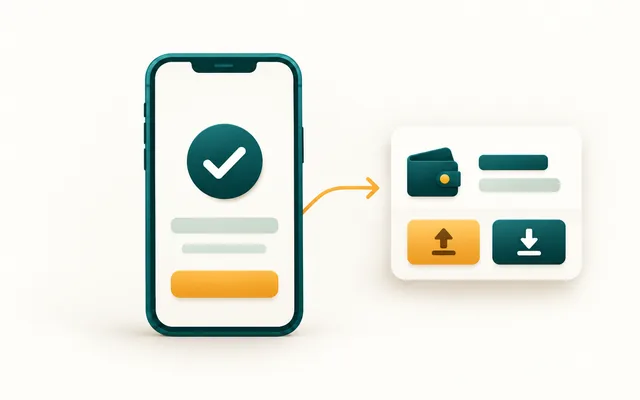
The difference shows up the first time you try it. Pick a card and you stay on the casino's page: sixteen digits, an expiry, three numbers on the back, submit. Pick Interac and the page you were on disappears. You are looking at a list of financial institutions, then at a sign-in screen belonging to your own bank, then at a confirmation button that the casino cannot see and cannot press. Nothing about your card is involved, because no card is involved.
That handoff is the whole character of the method, and it explains both its strengths and its irritations. You never hand payment credentials to the operator, which is why a lot of Canadian players prefer it. In exchange, a second institution with its own rules, its own limits and its own opinion about gambling merchants now sits in the middle. What follows is an account of that machinery and of who you should actually be asking when a step fails.
Interac is a network, not a casino payment brand
Interac is the shared Canadian payment network that the country's financial institutions built and still run between themselves. Its original and most visible job is domestic debit: the machine at the grocery till, the withdrawal from a bank machine that is not your bank's, the transfer that lands in somebody's chequing account. It is a set of agreements and switching infrastructure that lets institutions move money to each other without an international card scheme standing in the middle collecting a toll.
Two consequences matter for a player. The first is that Interac is domestic by design. It moves Canadian dollars between accounts held at Canadian institutions, which is why it feels native in a way a card payment routed through a global scheme does not, and why it tends to be the first option Canadian cashiers list. The second is that Interac does not hold your money. There is no Interac balance, no Interac account and no Interac support desk that can see your casino deposit.
That second point is the source of a lot of misdirected frustration. When a wallet goes wrong you can contact the wallet. When an Interac payment goes wrong there is no equivalent party: the transaction belongs to your bank at one end, to a processor and the operator at the other, and to a network in between that works as plumbing rather than as a provider you have a relationship with. So the logo on a cashier page is a claim about reachability, not about a product, and exactly which product sits behind it varies.
Interac Online, Interac Debit and e-Transfer: one brand, three machines
The confusion that costs players the most time is treating Interac as a single thing. It is a family. The member most people recognise is Interac Debit, the card product used at a till and increasingly online through a debit card loaded into a phone wallet. The member players discuss most is Interac e-Transfer, which pushes money between accounts using an email address or a mobile number as the destination. And the member this page is largely about is the online banking redirect, marketed for years as Interac Online.
The redirect model works in the opposite direction from a card. Rather than giving a merchant credentials it then uses to pull funds, you are sent to your bank, you authenticate there, and you instruct your bank to pay. The merchant receives a confirmation that a payment has been made and never sees an account number. It is a push, authorised on the bank's own screen, and that architecture is exactly why it has long been popular with merchants who struggle to get card acceptance.
Availability of that redirect has never been universal and has shifted over the years as Interac has put its weight behind e-Transfer and behind debit inside phone wallets. The practical effect is that a cashier button carrying the Interac name may route you to a bank sign-in, may generate an e-Transfer you send from your banking app, or may pass you to a third-party service that links to your account on your behalf. All three get described, loosely, as an interac casino deposit, and one small test deposit tells you which you have.
The mechanics of e-Transfer specifically, including the recipient side of it, are a separate subject with their own page: see Interac e-Transfer casino deposits rather than treating the two products as interchangeable here. The rest of this page stays with the bank-redirect model and with the banking questions that apply whichever Interac product your cashier reaches for.
The Interac family as a cashier might use it
Product
What it actually moves
Where you approve it
Direction it was built for
Online banking redirect (Interac Online)
A payment pushed from your chequing or savings account to a processor
Inside your own online or mobile banking, after signing in there
One way, toward the merchant: no return leg is built into it
Interac Debit
A debit against your account, on a card or a tokenised card in a phone wallet
On the terminal, or in the wallet on your device
Toward the merchant, refunds handled as a separate reversal
Interac e-Transfer
A transfer between two Canadian accounts, addressed by email or mobile number
In your banking app, where you create and send the transfer
Either way, which is why payouts often arrive on this rail
Third-party bank-linked services
A debit arranged by a company that connects to your account for you
On the service's own page, with a step it defines
Usually both, on the service's terms rather than Interac's
Interac sends you to your own bank to approve the payment, which is why it feels slower than a card.
Why the cashier sends you to your own bank instead of a card form
The redirect exists to solve a trust problem running in both directions. A merchant wants certainty that a payment is real and will not be clawed back weeks later. You want to avoid handing payment credentials to a business you have known for four minutes. Sending you to your bank satisfies both: it authenticates you with the security it already uses for everything else, checks the funds are there, and reports a yes or a no the merchant can rely on.
From the operator's side the attraction is finality. A card payment can be disputed through the chargeback machinery of a global scheme, and gambling is a category where disputes are common and expensive. A payment you authorised inside your own online banking is a different kind of record. From your side the attraction is the mirror image: the only place your banking credentials get typed is your bank's own sign-in page, and the processor receives a confirmation rather than numbers it could reuse.
The friction also has a technical edge that catches people out. A redirect depends on your browser allowing the handoff, on the cashier session staying alive while you are away at the bank, and on your banking app being willing to open inside an embedded browser window. Any of those can break in ways that have nothing to do with your money. If a deposit failed without ever producing a bank sign-in screen, the problem was in the handoff, not in your account, and retrying in a plain browser window is the first thing to try.
Which banks take part, and what to do when yours is not on the list
The list of institutions you see after the handoff is not a list of every bank in Canada. It is the set that both participates in the product being used and has been enabled by the particular processor behind that cashier. Those are two separate filters and they do not always line up. This is why one player reports that an interac casino deposit worked perfectly with their bank while another, at a different operator with the same bank, finds it missing from the menu entirely.
The big national banks are the usual anchors of such a list, and the credit union sector is where variation is widest, because credit unions reach shared services through central organisations and tend to be enabled in groups rather than one at a time. None of this is published anywhere convenient, and integrations are added and dropped without announcement, so the list in front of you today is the only authority worth trusting.
If your institution is absent, resist the obvious conclusion that Interac does not work for you. In almost every case the redirect is what is unavailable, not the network, and the same money can usually reach the same cashier by a neighbouring Interac route or by another method. The question to ask is not whether your bank supports Interac, which it almost certainly does, but which Interac product this specific cashier can reach for your specific institution. A greyed-out entry, as opposed to an absent one, usually means a temporary outage and rewards waiting rather than retrying.
Check whether the same cashier also offers Interac e-Transfer, which reaches a far wider set of Canadian institutions than the bank-redirect model does.
Look at the deposit list and the withdrawal list separately, because a method missing from one is frequently present in the other.
Consider a bank-linked service such as InstaDebit, which connects to your account on your behalf and solves the same problem from another angle.
If you hold accounts at two institutions, try the second before concluding the cashier cannot reach you at all.
Note the exact wording of any error before you retry, because a message naming a bank and one naming a processor point at completely different causes.
Do not switch to a method whose payout rules you have not read, since the route money takes in often constrains the route it can take out.
Step by step: who owns each part of an interac casino deposit
The value of breaking a deposit into steps is that each step has an owner, and knowing the owner tells you who can fix a problem. Players lose hours asking casino support about events that happened entirely inside a bank, and asking a bank about a session that expired inside a processor's page. The table below sets the chain out in order, names the party holding the transaction at each point, gives a realistic sense of duration, and lists the specific thing that tends to break there.
Read the duration column as a shape rather than a promise. Almost every step is genuinely a matter of seconds, which is the honest reason the method has a reputation for immediacy. The steps that are not instant are the ones involving you: finding credentials, waiting for a code, choosing an account. Total elapsed time is therefore mostly a measurement of how practised you are. Note too how often ownership changes hands: five handoffs in a transaction most people describe as one click.
One pattern deserves calling out before you read the rows. If the debit is visible in your banking and the casino balance is not updated, the break is at the confirmation step, and it is usually temporary. The money left under an instruction your bank considers complete, and the processor's message back to the operator is late or lost. That is a support ticket worth opening with the operator, with your bank's reference number in hand, rather than a reason to deposit a second time and hope.
An Interac deposit broken into steps, with the owner of each
Step
Who does it
How long it usually takes
What can break here
You choose Interac in the cashier and enter an amount
You, on the operator's page
Seconds
An amount under the cashier floor or over a per-transaction cap, or Interac offered only for a currency you do not hold
The cashier hands your session to its payment processor
The operator and its processor
Seconds, usually a page that forwards itself
A blocked pop-up, an extension interfering with the redirect, or a processor outage that drops you back silently
You pick your financial institution from the list
You, inside the processor's page
Seconds
Your institution absent from the list, or greyed out because of a temporary outage on one side
You sign in to your own online or mobile banking
You and your bank
Under a minute if your credentials are to hand
A code that does not arrive, a locked sign-in, or an app that refuses to open in an embedded window
You select the account to pay from and approve the payment
You, on your bank's own screen
Seconds
Available balance lower than book balance, a daily transfer limit already used, or an account the bank will not debit this way
Your bank authorises or refuses, and tells the processor
Your bank alone
Seconds
A bank rule on gambling merchant categories, a fraud flag from an unfamiliar payee, or a restriction already on the account
The processor confirms to the operator and your balance updates
The processor, then the operator
Usually immediate, occasionally several minutes
A confirmation arriving after the session expired, leaving the debit visible at the bank before the balance moves
The debit posts to your account history
Your bank
Same day for most accounts, next business day for some
A pending entry that looks like a duplicate, or a description unlike the operator's trading name
How to read an Interac decline when it comes from the bank
Here is the single most useful fact on this page: a failed Interac deposit is more often refused by your own financial institution than by the casino. The operator wants the deposit. Its processor wants the deposit. The only party in the chain with a reason to say no, and a rulebook that might require it to, is the institution being asked to release the funds. Yet the message you see is usually displayed by the cashier, which is why the blame so reliably lands in the wrong place.
The wording of a refusal is a clue to its source, and it pays to read it literally rather than for tone. A message naming your bank, quoting a bank reference, or mentioning insufficient funds or a limit came from the bank side. One about a session, a timeout or a method not supported for your account came from the cashier or its processor. The two families have different fixes and different people to ask.
Bank-side refusals break down further into three honest categories. There is not enough available money, which is not the same as not enough money, because holds and uncleared deposits reduce what you can actually move. There is a limit, often a daily transfer ceiling you did not know existed. And there is a policy decision: some institutions restrict or decline payments to gambling merchant categories, and some offer customers a control that does precisely that on purpose.
That third category is worth stating plainly, with no suggestion of working around it. If a bank has decided it does not route payments to this category, that is the bank's decision to make, and the only legitimate response is to ask the bank what its position is and to use a different institution or method if you choose to continue. Likewise, if a block exists because you asked for one, or because you have registered a self-exclusion, it is doing exactly the job you gave it.
Read whether the message names a bank or names a session: that one detail decides whether you contact your institution or the operator.
Check available balance rather than the headline balance, because holds, pending debits and uncleared funds all reduce what can actually be sent.
Ask your bank directly whether a daily or per-transaction limit applies to the account you are paying from, and what the number is.
Stop after two failed attempts and find the cause, since a run of declines can lock a sign-in or trigger a review that takes days to clear.
Keep the exact error text and the time, because an attempt that never posted to your statement can still be traced in your bank's logs by timestamp.
The asymmetry: instant on the way in, a different route on the way out
Players arrive expecting symmetry, and the biggest misunderstanding about this method is the assumption that money which went in through Interac in twenty seconds will come back out through Interac in twenty seconds. It usually does not, and the reason is structural rather than operational. The bank-redirect product was built as a one-way push toward a merchant. It authenticates a payer and confirms a payment. It has no reverse gear, because paying customers back was never the problem it was designed to solve.
So when a cashier owes you money and your deposit arrived by redirect, the operator has to substitute something. In Canada the usual substitute is Interac e-Transfer, which genuinely runs in both directions, and the next most common is an ordinary bank transfer or EFT. Both are real routes and often perfectly quick. Neither is the route you used to deposit, so the rules, limits, minimums and processing behaviour can all differ from the ones you read on the way in.
There is a second wrinkle that surprises people, and it is a rule rather than a mechanism. Many operators are obliged, or simply prefer, to return funds toward the source they came from. When the source rail cannot receive, that policy has to bend, and the bending usually means extra account details, a name match against your banking records, or a document request before the first payout is released. None of that is punishment. It is the cost of a one-way deposit rail meeting a two-way obligation.
The practical conclusion is to plan the exit before the entrance. Open the withdrawal list in the cashier rather than the deposit list, and see what is actually offered to your account. If the answer is e-Transfer, make sure the receiving details you would use are already in place. Which leg of a payout each method really controls is the subject of the payout speed page, and it is worth reading before a win rather than after one.
What shows up on your bank statement, and why some banks file it separately
The entry on your statement rarely says what you expect. What you see is a merchant descriptor, and the descriptor belongs to whoever acquired the payment rather than to the brand on the website. That is frequently a payment processor with a corporate name you have never encountered, sometimes with a city attached that has nothing to do with you. The amount will be right and the date will be right, but the name can look alien enough that players report a legitimate deposit as fraud. Keep your own note of the date, amount and cashier reference for exactly this reason. It matters most if you deposit at more than one operator, because two brands can sit behind the same processor descriptor and become indistinguishable on the statement line alone.
Separately from the descriptor, many institutions classify the transaction by merchant category, and gambling has its own. What a bank does with that classification varies. Some do nothing. Some surface it in a spending breakdown in the app, which is useful if you want an honest monthly total. Some apply extra checks to the category, and some offer a customer-controlled switch that blocks it outright, which is a feature rather than an obstacle for the people who want it.
A point of contrast worth knowing: because the redirect debits a bank account, it does not behave like a credit card payment to a gambling merchant, which some issuers treat as a cash-like advance with its own charges and interest from day one. Paying from money you already hold avoids that entire category of cost, which is one of the quieter and more structural arguments for a bank rail over a card.
Minimum amounts and where the floor comes from
Every cashier has a smallest acceptable deposit for each method, and the figure for a bank rail is often slightly higher than the one for a card or a wallet. The reason is arithmetic rather than policy. A bank-rail transaction carries costs that do not shrink with the amount: a per-transaction fee to the processor, a share for the acquiring side, and a fixed quantity of reconciliation and support work on the operator's books. Below a certain size, accepting the money costs more than the money is worth.
There are also floors you did not expect, set further up the chain. Your own institution may impose a minimum on the kind of transfer involved, and a processor can apply a floor of its own above the operator's. The number on your screen is the highest of those three, which is why a figure quoted in an article can differ from the figure in your cashier without either being wrong. The screen is specific to your account, your institution and that processor, and it wins every time.
Keep a third kind of threshold mentally separate: the amount a promotion requires. Searches for a five or ten dollar minimum deposit are extremely common, and what people are usually asking is whether a small deposit still qualifies for something. That is a bonus-terms question rather than a payments question, and the terms are where it gets settled.
Cashier floors in general, including how they differ by method and what a low floor is actually good for, are covered on the minimum deposit page, and the case players search for most often is handled at ten dollar deposits. For Interac specifically, treat the smallest permitted amount as a test: one cheap deposit tells you which product the cashier uses, whether your bank is listed and how the descriptor will read on your statement.
Verification: why the questions arrive after your first withdrawal
A pattern that puzzles new players: you deposit by Interac and nobody asks you for anything, then you request your first payout and suddenly there are documents to upload. It looks arbitrary and it is not. The two events carry different risks and sit under different obligations, and the asymmetry in how much proof is demanded follows directly from that. Understanding why makes the request feel like a procedure rather than an accusation, and it tells you exactly when to get ahead of it.
Consider what a deposit already proves. To push money from a Canadian bank account you had to authenticate inside an institution that identified you when it opened the account, that holds your address, and that is itself bound by identification rules. The payment arrives carrying that implicit assurance: a real person with a verified account, who proved it minutes ago on the bank's own sign-in screen, from a source that is hard to fake and will not be reversed on a whim.
A payout reverses every one of those comforts. Now the operator is the one sending money, and it has to be satisfied it is sending to the person who owns the account on its own books rather than to whoever happens to be using the login today. That is the point at which identity, address, age and ownership of the receiving details all have to be established on the operator's records instead of borrowed from your bank's. Anti-money-laundering frameworks also key on totals reached over time, which is why the third payout can attract a check the first two did not.
The actionable part is simple and the same at every operator worth using. Complete verification when you register, in a quiet moment, with documents that are current and photographed properly. Make sure the name on your casino account matches the name on the bank account you will be paid into, including middle names and spelling. Both tasks take a few minutes while nothing is pending, and both turn into an unpleasant scramble if you leave them until money is waiting on them.
Fees, limits and the three places a charge can appear
A bank rail has a reputation for being free, and for many players it genuinely is, but the honest description is that there are three separate places a charge can appear and you need to check all three. The operator can levy a cashier fee. The payment processor can take a service charge, sometimes visible as a slightly different amount arriving than the amount you sent. And your own financial institution can charge for the transaction type involved, which is the one almost nobody checks in advance.
The institution's charge is the most variable and the most personal to you. It depends on your account package rather than on the casino: some chequing accounts include an unlimited number of the relevant transactions, some include a monthly allowance a frequent depositor will burn through, and some bill each one. Credit unions and digital banks differ widely here. The number is in your own account agreement, and reading it is a five-minute job you only ever need to do once.
Limits deserve the same three-way treatment. There is a cashier limit per transaction and often per day, a processor limit that can sit below it, and a bank limit on how much you can move in a day by the relevant method. The effective ceiling is the lowest of the three, and the one that stops you is frequently your bank rather than the operator. That is a call to your institution, not a support ticket with the casino.
Interac casinos canada: the Ontario market and the rest of the country
Payment mechanics are national but regulation is not, and in Canada that distinction decides a great deal about what sits in your cashier. Ontario is the only province with its own regulated private internet gaming market: iGaming Ontario runs it, the Alcohol and Gaming Commission of Ontario regulates, operators go through registration to serve the province, and the catalogue of registered sites is published and dated. As of 1 September 2026 that public catalogue listed 49 operators and 84 gaming sites.
Two details are worth holding on to. Play is tied to being physically in Ontario, so the market is defined by where you are rather than where you are from. And OLG.ca sits outside the iGO arrangement, running under OLG's own conduct and management. Elsewhere in the country the model is provincial monopoly: Loto-Quebec in Quebec, BCLC in British Columbia, PlayAlberta in Alberta. No other province has opened a registered private market of the Ontario kind.
For a payments question this means the inventory of methods in front of you is shaped by regulation as much as by commerce. Two sites can both display the Interac name and differ in which products they reach, which minimums apply and how payouts are routed, because they work under different frameworks with different requirements. A list of interac casinos canada compiled without reference to where the reader is will therefore be wrong for most readers most of the time.
Do not take anybody's word about an operator's registration status, this page included. Look the name up yourself in the public register and read what is recorded there, with its date. Ontario also runs BetGuard at betguard.ca, launched on 14 May 2026, where a single self-exclusion covers every regulated site in the province, including OLG, for six months or longer. iGO has warned about counterfeit sites imitating it, so type that address by hand, and reach your online banking through your own bookmark for the same reason.
Online gambling in Ontario is for players aged 19 and over, it is entertainment rather than a way to make money, and no payment method makes a deposit you cannot comfortably lose a sensible one: set your own limits before you fund an account and use the operator's tools, or BetGuard, to hold yourself to them.
Where the neighbouring Interac questions get answered
This page is deliberately about the machine, and three questions that arrive alongside it are handled properly elsewhere rather than summarised badly here. If your question is about e-Transfer specifically, the recipient side of it and the way a transfer is created and accepted in your banking app, that belongs to Interac e-Transfer casino deposits. If your question is whether a particular operator takes the method at all, and how to check that properly before you commit money, that is casinos that accept Interac. If you want operators weighed against each other on stated criteria, with the reasoning set out, that is best Interac casinos.
For the wider view, the payment methods hub puts Interac next to its alternatives, including MuchBetter for players who prefer a wallet and Paysafecard for those who would rather not involve a bank account at all. Each has a different shape of weakness, and the right comparison is not which is best in the abstract but which weakness you are willing to live with for the way you actually play.
A sober way to use online casino interac
Pulled together, the method is easy to describe and easy to use well. An online casino interac deposit is a payment you authorise inside your own bank: no payment credentials leave your hands, the money comes from funds you already hold, and confirmation is close to immediate when every party is behaving. The price is a second institution in the middle with its own limits, and a return journey that normally uses a different Interac product.
So the sensible routine has four parts and none of them are difficult. Test the cashier once with the smallest permitted deposit and note which product appears. Read the withdrawal tab before you need it, so the exit route is a decision rather than a discovery. Finish verification while nothing is pending. And learn, once, what your own bank's daily limit and transaction charges are, because that is the constraint most likely to stop you and the one no casino page can tell you.
The partner this site points to for Canadian players is 22BET, rated five stars across 4,889 reviews here. Which payment methods appear for your account, what the floors and ceilings are and how payouts are routed are all things to confirm in the cashier after you sign in, and in the operator's current terms rather than in anybody's summary of them. Look the operator up in the public register as well, and let the register settle the question of status.
If you take one idea away, make it the division of labour. The casino decides whether to accept a deposit and when to release a payout. Your bank decides whether the money moves, how much can move in a day and what it costs. Interac is the plumbing between them and has no opinion about your account at all. Knowing which of the three to ask turns most Interac problems from a mystery into a single phone call, and that is the whole value of understanding the bank leg.
19+ in Ontario, 18+ in Alberta, Manitoba and Quebec. The rating shown here is the operator rating reported by the site owner on 19 October 2026: five stars from 4,889 reviews. Availability depends on where you are and on eligibility. Deposit routes, cashout timing, verification steps, offer structure, wagering and limits are set by the operator and are not stated here — read them in the cashier and in the current terms after you sign in. We do not guarantee payout speed or availability in your province. Gambling costs money; treat any balance as spent. Checked: 19 October 2026.
Questions people actually search
What is an interac online casino?
It is a casino whose cashier can take payment through Interac, the shared Canadian interbank network, rather than through a card scheme. Instead of entering card details you are handed to your own online banking, where you sign in and approve the payment. The operator receives a confirmation and never sees your account number.
Why does an interac casino deposit redirect me to my bank?
Because the product is a push rather than a pull. You instruct your bank to pay, authenticated with the security your bank already uses, and the merchant gets a confirmation it can rely on. It is the reason no payment credentials are stored with the operator, and the reason every deposit needs a fresh sign-in.
My bank is not on the list. Does that mean Interac will not work for me?
Usually not. The list shows institutions enabled for that specific product at that specific processor, which is narrower than the network itself. Check whether the same cashier offers Interac e-Transfer or a bank-linked service, and look at the withdrawal list separately, since the two inventories are often different.
Who declined my Interac deposit, the casino or the bank?
More often the bank, since the operator and its processor both want the deposit to succeed. Read the message literally: one naming your bank, a reference number, insufficient funds or a limit is bank-side, while one about a session, a timeout or an unsupported method came from the cashier or processor.
Can I withdraw back through the same Interac route I deposited with?
Not usually by the bank-redirect product, which was built as a one-way push to a merchant and has no return leg. Canadian payouts commonly go out by Interac e-Transfer or an ordinary bank transfer instead, under their own limits and minimums. Read the withdrawal tab in your cashier before you deposit.
Why do interac casinos canada ask for documents only when I withdraw?
A deposit already carries proof, because you authenticated inside a bank that identified you when it opened your account. A payout reverses that: the operator must establish on its own records who it is paying. Totals reached over time can trigger a check too, which is why the timing looks inconsistent.
Does an Interac deposit appear on my statement as the casino's name?
Rarely. The descriptor belongs to the payment processor that acquired the transaction, so the name can be unfamiliar and the city irrelevant. Keep your own note of the date, amount and cashier reference, and remember many institutions also file the entry under a gambling merchant category.
Checked by the OntarioCashout desk.
Operator terms change without notice: read the cashier and the current terms at 22BET before you
rely on anything here. Open 22BET.


 5.0 stars from 4,889 reviews