19+ in Ontario, 18+ in Alberta, Manitoba and Quebec. The rating shown here is the operator rating reported by the site owner on 19 October 2026: five stars from 4,889 reviews. Availability depends on where you are and on eligibility. Deposit routes, cashout timing, verification steps, offer structure, wagering and limits are set by the operator and are not stated here — read them in the cashier and in the current terms after you sign in. We do not guarantee payout speed or availability in your province. Gambling costs money; treat any balance as spent. Checked: 19 October 2026.
This game does not have reels in the way most slots do, and it has no paylines at all. It pays for counting symbols on a grid, then drops new ones into the gaps. Read it like a line slot and almost nothing on the screen will make sense.
By the OntarioCashout desk · checked October 19, 2026 · 19+ Ontario
Sweet Bonanza review: a grid that counts symbols, not lines
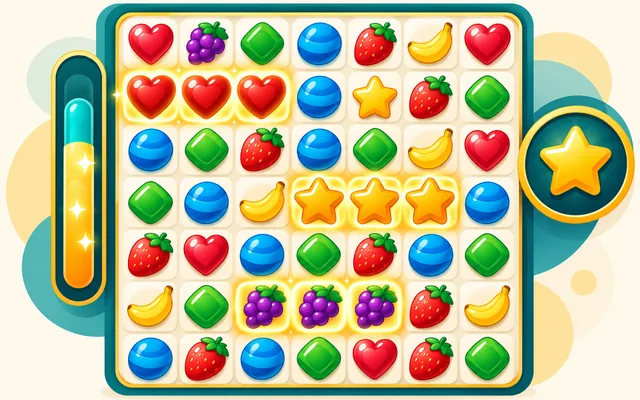
A sweet bonanza review that opens with a verdict is no use to you, because what confuses people here is structural rather than a matter of taste. Pragmatic Play built the game on a grid six columns wide and five rows deep, with no paylines drawn across it. A win is a count: enough matching symbols anywhere, in any arrangement, and the paytable pays for the count.
That one change breaks the habits a line slot teaches. There is no left-to-right reading, so there is no near miss, and a symbol sitting one row off a line was never close to anything. There is no bet-per-line decision either, because the stake buys the whole grid. Our real money slots guide covers the reading habits that do carry over.
No paylines: position never matters, only how many matching symbols sit on the grid at once.
Scatter pays: the paytable is read by symbol count, in bands, and that is where the maths lives.
Tumbles: one spin can resolve in several paying steps before the grid finally settles.
Scatter pays: the count is the win, not the position
On this grid a win needs a minimum number of matching symbols on screen at once, eight in the original game, and that figure is printed in the paytable you should open before staking. They do not have to touch, line up or start from the left. Eight bananas scattered across all six columns pay what eight bananas in a block would pay.
What follows is that the arrangement carries no information at all. There is no pattern to chase, no position to prefer, and nothing to interpret when a spin pays nothing. The only variables are which symbols fall and how many, and the paytable steps up in bands as the count grows, with the top band needing a large share of the grid.
Tumbles: one stake, several payouts
When a count pays, those symbols are removed and new ones drop into the gaps. If the refilled grid holds another qualifying count, it pays again on the same stake, and the sequence continues until a drop produces nothing. That is the tumble, and it is why a single spin here can resolve in four or five steps instead of one.
The effect on a balance is worth understanding before you fund an account. A spin that pays at all tends to pay more than once, so the paying spins land heavier than a line slot's and the quiet ones feel longer. Hit frequency, where it is quoted, usually describes the spin rather than the steps inside it, so the figure understates how lumpy the experience actually is.
A cluster-pays grid, not reels. Scatter wins are why the maths reads oddly.
Multipliers fall from above and add together
In the free spins round, multiplier symbols drop onto the grid carrying their own values. Once the tumble sequence finishes, the values on screen are added together and applied to what that sequence paid. Added, not compounded. A multiplier landing during a sequence that pays nothing is worth nothing, which is the detail most write-ups of the game skip past.
So the large outcomes come from a coincidence: a high symbol count and a stack of multipliers inside the same sequence. That is the entire tail of the distribution, and it is nothing like the steady grind of a low-variance title. Variants differ here too, since some later releases put multipliers in the base game, so the panel in front of you is the authority.
What each mechanic does to a balance, and what follows for the stake you choose
Mechanic
What it does to your balance
What follows for your stake
Scatter pays on a count
Pays arrangements a line slot would call nothing
Read the paytable by count; the stake buys the grid
Tumbles refilling the grid
One spin can pay in several steps, so paying spins land heavier
Judge a session by spins played, not by one spin
Multipliers summing in the feature
Most of the biggest outcomes come from a few sequences
Size the stake for the flat stretches between them
Long runs of nothing
The normal state of a high-variance grid, not a cold streak
Divide the budget by the spins you want, then round down
A feature buy, where offered
Converts a block of balance into one guaranteed entry
Treat the price as the stake: a few buys can empty the budget
Volatility in bankroll terms, not adjectives
Calling a game high volatility tells you nothing you can act on. The consequence is what matters: most spins return nothing or less than the stake, and a session is decided by a rare sequence that may not arrive at all in the spins you can afford to play. The flat stretches are the mechanism working as designed, not a fault and not a sign of anything.
Which inverts the way most people pick a stake. Decide the amount you are prepared to lose, decide how many spins you want out of it, and divide. Thirty dollars across three hundred spins is a ten-cent stake. The same thirty dollars at a dollar a spin is thirty spins, and thirty spins of a game shaped like this tell you nothing.
Set the amount first and treat it as a purchase price, not a float to be topped up.
Divide it by the spins you want, then take the next stake down that the game offers.
Expect long runs with nothing in them: no spin is owed because the last forty were empty.
A balance that disappears in forty spins has told you nothing about the game, only about the stake you chose.
Buying the bonus is a different bet, not a discount
Where an operator enables it, the feature buy costs a fixed multiple of your stake and hands you one guaranteed entry into the free spins. It is not a shortcut to the same maths. Every dollar goes straight into the most volatile part of the game with the base game taken out, so the shape of the outcomes changes rather than merely the pace of them.
Two practical points. The long-run return on a buy can be configured separately from the base game, so it is a different bet in the arithmetic as well as in feel. And the price usually equals dozens or hundreds of ordinary spins, which is the comparison to make before clicking. Availability depends on the operator and the market, and bonus terms often forbid buys outright, as our spin offers guide explains.
Sweet bonanza rtp: a setting the operator chooses
Return to player is the share of everything staked that a configuration gives back across an enormous number of spins. The part people miss is that it belongs to the configuration and not to the name. A title can ship in several RTP settings, the operator decides which one it runs, and the highest available setting is not always the one you are playing.
Which is why there is no sweet bonanza rtp figure quoted on this page. A number in any review describes whatever build that reviewer opened, in whatever market, on whatever date. Open the information panel in the game at the operator you are actually using, read the figure there, and treat a lobby that will not show it as a lobby with something to hide.
Demo play, lookalike names, and what to settle first
The demo is genuinely useful and routinely oversold. Free play shows how the counts resolve, how often the base game pays anything and where the paytable bands sit, which is the part worth learning before money is live. What it cannot do is predict a real session: the sample is short, the balance is not yours, and nothing about it carries across to a funded account.
Names are the other trap. Searches for sweet bonanza canada, pragmatic play sweet bonanza, sweet bonanza super scatter and sweet rush bonanza return a family of separate titles with their own paytables and settings, so confirm the exact name and the studio in the panel. If you want a game where your decisions move the house edge instead, that is blackjack.
In Ontario, play only at a site you have found in the public register, only while you are in the province, and only at 19 or over; outside Ontario it is your provincial operation, which our Canada overview sets out. Funding sits in our minimum deposit guide. The partner this site recommends, 22BET, holds 5 stars from 4,889 reviews, and what a lobby offers today is in its own screens.
19+ in Ontario, 18+ in Alberta, Manitoba and Quebec. The rating shown here is the operator rating reported by the site owner on 19 October 2026: five stars from 4,889 reviews. Availability depends on where you are and on eligibility. Deposit routes, cashout timing, verification steps, offer structure, wagering and limits are set by the operator and are not stated here — read them in the cashier and in the current terms after you sign in. We do not guarantee payout speed or availability in your province. Gambling costs money; treat any balance as spent. Checked: 19 October 2026.
Questions people actually search
How does Sweet Bonanza pay?
It pays by count rather than by line. Enough matching symbols anywhere on the grid make a win, the winning symbols are then removed, and new ones drop in, so one spin can pay several times over.
How do you play Sweet Bonanza?
Set a stake derived from the number of spins you want, then spin. No decision changes an outcome, so the stake is the only real choice, and the paytable is read by symbol count.
What is the Sweet Bonanza RTP?
There is no single figure. The game ships in more than one RTP configuration and the operator chooses which to run, so the number that applies to you is the one in that game's information panel.
Is buying the bonus worth it?
It is a different bet, not a discount. The buy puts every dollar into the most volatile part of the game, its return can be configured separately, and bonus terms frequently ban it.
Does the Sweet Bonanza demo predict real money results?
No. A demo shows the mechanics and the pace, which is worth knowing, but a short unfunded sample says nothing about what a funded session will do.
Is Sweet Bonanza Super Scatter the same game?
No. Similar names cover separate releases with their own paytables and settings, so check the exact title and the studio in the information panel rather than assuming the maths carries over.
Checked by the OntarioCashout desk.
Operator terms change without notice: read the cashier and the current terms at 22BET before you
rely on anything here. Open 22BET.